







Jose Marti’s Poetry Shapes Cuban Musical Identity
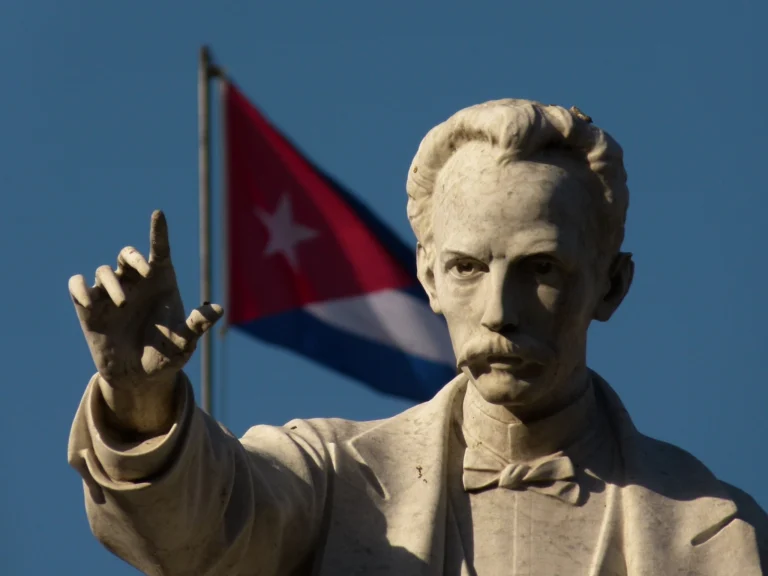
Sculpture of Cuban poet José Martí. X/@ALBATCP.
March 3, 2026 Hour: 12:05 pm
🔗 Comparte este artículo
The independence hero’s verses have become songs that embody the national sentiment.
Sindo Garay (1867-1968), a leading figure in Cuban trova music, claimed to be the only living Cuban at that time who had personally met Cuban poet Jose Marti. They met in 1895 in Dajabon, Dominican Republic, when Garay was working as a trapeze artist and acrobat in a traveling circus.
RELATED:
Havana to Host 15th Nicolas Guillen International Colloquium and Festival
In addition to his artistic pursuits, Garay actively supported the Cuban independence movement, raising funds for those fighting against Spanish colonialism. In Santiago de Cuba, Garay and other troubadours, such as Pepe Sanchez, participated in clandestine activities. They transmitted messages and even swam across the bay to deliver information.
Marti had visited the Dominican city to speak to a group of Cubans, who improvised a platform with stones and sticks, gathering people and weary fighters. They, as Garay, listened attentively to Marti’s thoughts on the fight for independence. In the end, he shook Marti’s hand, a gesture he considered the “greatest fortune” of his life.
His encounter with the Cuban poet profoundly marked him, inspiring him to compose the song “Portrait of Marti” (Semblanza a Marti), meant to be sung as an anthem. This set to music the memory of that moment and demonstrated how the Marti’s words were perpetuated in the work of those who listened to them.
Marta Valdes, a Cuban singer-songwriter, described Garay as “the necessary myth.” He composed more than 600 songs and was a disciple of Pepe Sanchez, considered the Father of Cuban Trova. Garay’s work transcended generations and solidified the trova as a genre that blends poetry, social commitment, and artistic expression.
The text reads, “Tribute to the Master! The José Martí Cultural Center hosted a day filled with trova music and poetry to honor the legacy of the independence leader. A reminder that his ideals of freedom remain more alive than ever.”
But Marti’s influence on Cuban music extended beyond Garay. In 1978, Cuban musician Amaury Perez set poems by the Apostle, such as “Magdalena” and “Carmen,” to music.
The latter was published in 1876 by Marti and dedicated to his wife Carmen Zayas. The troubadours’ will to transform verses into songs demonstrates how Marti’s poetry became a bridge between literature and popular music.
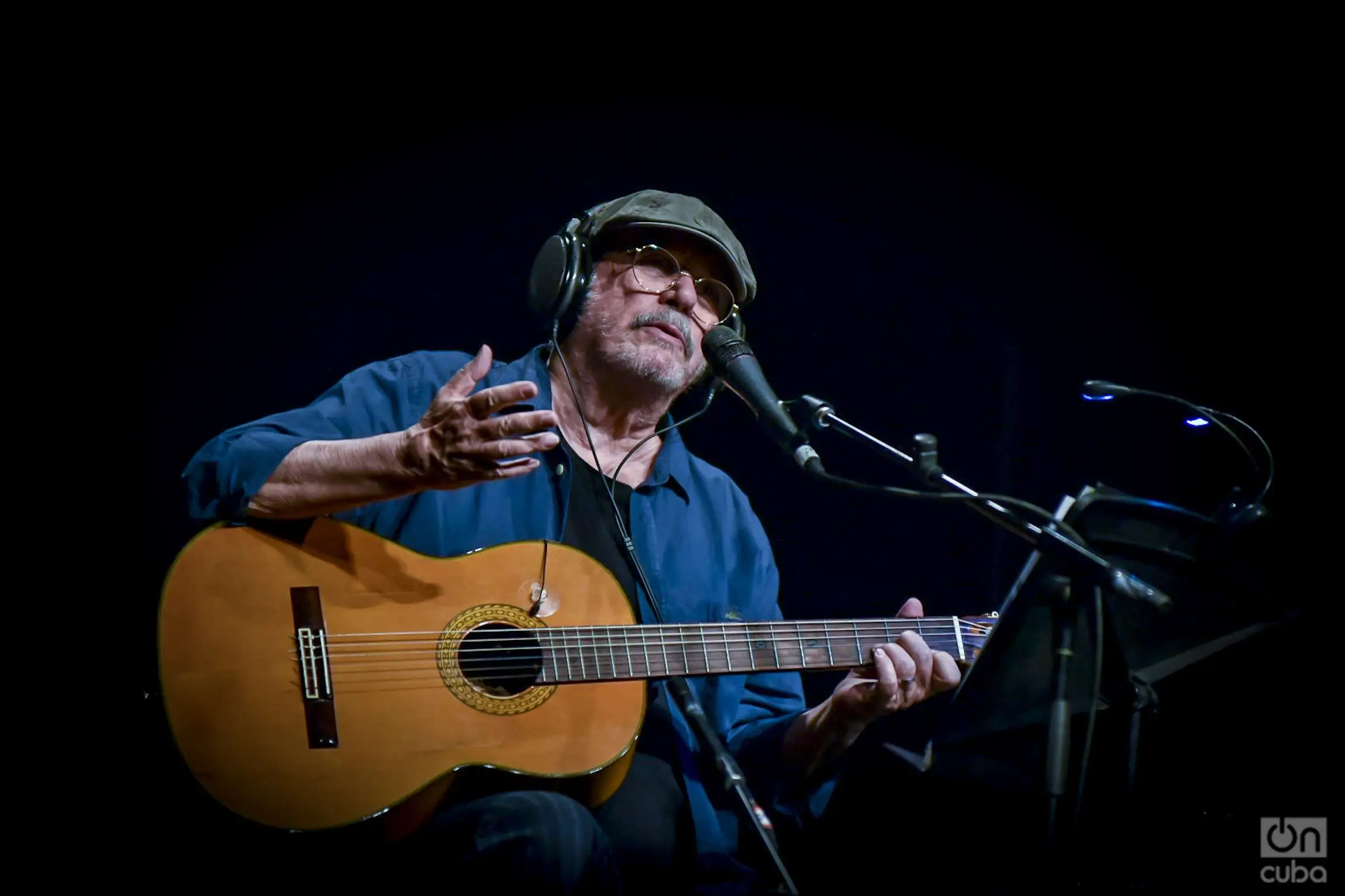
Sara Gonzalez, a musician of the New Trova movement, performed pieces like “My gentleman” (Mi caballero) and “I am a sincere man” (Yo soy un hombre sincero). Her respect for the accentuation and original content of Marti’s texts was highlighted by Augusto Blanca, who noted that Sara preferred to adjust the music rather than alter a single word.
Cuban singer-songwriter Pablo Milanes also left his mark by setting Marti’s poems to music. In 1974, he recorded his first album of Marti’s verses, commissioned by Haydee Santamaria from the House of the Americas.
In his voice, works like “Dream of Marble Cloisters” (Sueño con claustros de marmol) and “I Have Seen It in the Dark Night” (Yo he visto en la noche oscura) became touchstones of Latin American sentimental memory.
Silvio Rodriguez, another pillar of the New Trova movement, confessed that Marti had marked him from childhood because of his family’s influence. He incorporated the poet’s verses into songs like “A Dark Sprout Approaches” (Se aproxima un brote oscuro), where he added the famous quatrain “I am a sincere man.”
For Silvio, all his work is an unconscious tribute to Marti, although he never dared to dedicate a specific song to him for fear of “not doing him justice.”
The text reads, “The Rubén Darío National Theater hosted the concert ‘Trova and Something More’ by the Cuban duo Buena Fe. The show served to celebrate the 67th anniversary of the Triumph of the Cuban Revolution and to share the occasion with Cuban residents and supportive friends.”
Martí’s influence was also reflected in the work of musician Julian Orbon, who incorporated verses by the Apostle into “La Guantanamera.” Collector Emilio Cueto recorded as many as 711 pieces inspired by Martí through 2012, demonstrating that he has been the most performed writer in Cuba, with his lyrics adapted to symphonic, choral, electroacoustic, and concert formats.
The Cuban poet’s children’s book, “La Edad de Oro” (The Golden Age), published in 1889, also inspired singer-songwriters like Teresita Fernandez. She set 16 of the Apostle’s texts to music, dedicated to children and the natural world. Martí had written that verses should be “useful to the world,” and Teresita transformed that idea into tender, universal songs.
In recent times, Cuban music has continued to pay homage to Martí. Politician and composer Juan Almeida composed “Elegy to Martí,” performed by the Band of the General Staff of the Revolutionary Armed Forces. Later, the musical group Buena Fe, along with Silvio Rodriguez, released “The Tempest” in commemoration of the 164th anniversary of the Apostle’s birth.
The relationship between Martí and the troubadours shows that Cuban music not only entertains but also transmits values, memory, and commitment. From Sindo Garay to the New Trova movement, and including figures like Sara Gonzalez and Pablo Milanes, the Apostle’s verses have become songs that embody national identity.
teleSUR: JP
Source: teleSUR